
Development is at a crossroads. Here’s how Blum Center students are charting a path forward.
The United States was and still remains the single largest donor of humanitarian aid in the world. In fiscal year 2023 alone, the country accounted for 43%
The United States was and still remains the single largest donor of humanitarian aid in the world. In fiscal year 2023 alone, the country accounted for 43%

Before Yasha Zink became a UC Berkeley entrepreneur, she was a friend looking for answers. The summer before her freshman year, one of her closest friends had

A new member of the Graduate Group in Development Engineering, Ceferino and his team move in after disasters, working on the ground to understand how and why infrastructure fails — and how governments can build city systems that are better equipped to withstand the next one.
When Michelle Gallaga moved to the U.S. from the Philippines with her two young kids in 2010, she didn’t know anyone in her new home. “We

Casillas Rios, a three-year student fellow at the Blum Center, graduated this May from the Global Poverty & Practice minor. Since high school, she’s been committed to enhancing the quality and availability of public green spaces in her community.

Through roles with the International Rescue Committee, UNICEF, UNFPA, and Columbia University School of Public Health, Navani spent years building health data systems in conflict and disaster settings. She describes a pattern that kept surfacing across the more than 15 countries she’s worked in: The groups facing the steepest health risks were also the ones least visible in the data systems.

She comes from a long line of tea farmers who cultivated the land long before global supply chains and corporate monopolies reshaped the region’s tea industry. Though she didn’t grow up on the farms full time, that history shaped how she understood land and labor.

“The gift of Development Engineering, to me, is learning to think about the technical and the human in the same hand,” commencement speaker Pratiyush Singh told his peers and their guests. “I leave with a way of seeing: one that showed me that who I am and what I want to do are not competing worlds, but the same story.”

Gallaga had attended the University of the Philippines Conservatory of Music in Diliman as a voice major, while belonging to the Philippine Madrigal Singers, an a capella choir that took her around the world for festivals, world tours, and competitions.

Together, the cohort brings experience spanning data science, medicine, material science, policy, and more, and will spend the next 15 months in an intensive program that blends technical training with human-centered development courses — preparing them for careers in social impact, entrepreneurship, design, and sustainability.
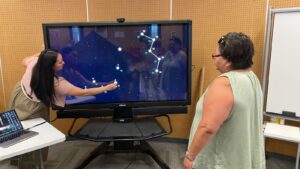
Initiated by the American Indian Higher Education Consortium (AIHEC), the Alliance’s “backbone,” the collaboration opened doors for Berkeley students to intern at NTU, teaming up with faculty and peers on engineering projects in a month-long program in Crownpoint, New Mexico.
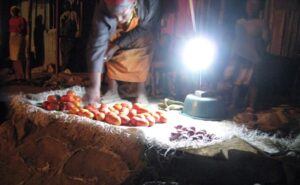
With support from the Blum Center, the Berkeley Lab scientist and his colleagues provided the first substantive analysis of how electric lighting — specifically, high-efficiency solar-powered electric light sources unattached to an electrical grid — improves the lives and well-being of people using fuel-based lighting.