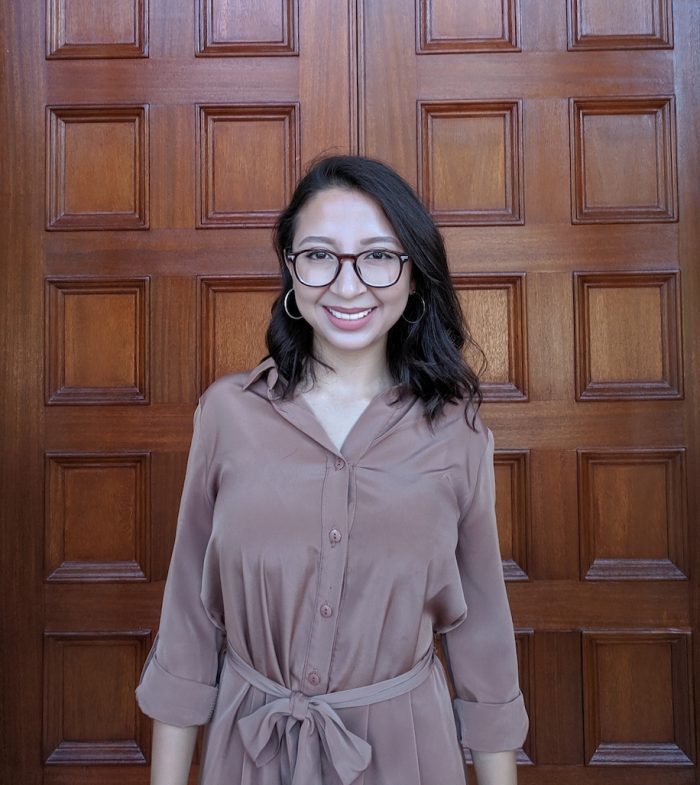
How Michelle Gallaga found community and belonging through the Global Poverty & Practice minor

When Michelle Gallaga moved to the U.S. from the Philippines with her two young kids in 2010, she didn’t know anyone in her new home.

“We had to start a life and really try to navigate being an immigrant and all the hardships that come with it,” she says.

“When you move to a different country at 40,” she adds, “people already have their own friends and their cliques, and so I never really got to form my own group of friends.”

Not having completed college, she found, limited her opportunities, and she encouraged her kids to pursue the degree she hadn’t attained. Once they had left home to do so, however, it didn’t sit quite right with her that she had pushed them to do something that she herself hadn’t been able to.

And so, as a birthday present to herself, Gallaga enrolled at Berkeley City College, and not without some apprehension.

But it wasn’t the first time that the graduating Global Poverty & Practice student had enrolled in college.

Gallaga had attended the University of the Philippines Conservatory of Music in Diliman as a voice major, while belonging to the Philippine Madrigal Singers, an a capella choir that took her around the world for festivals, world tours, and competitions.

She spent seven months away from the Philippines during the group’s 1989 tour and found it difficult to re-enroll in classes after returning, choosing to stay on with the choir for another three years.

She eventually did go back to school again, this time for music theory, but dropped out after joining a cover band.

In 2000, Gallaga got married, retired from singing, and gave college another shot, studying education to become an elementary school teacher. For two years she taught English in rural schools with poor infrastructure and limited educational resources.

“I loved the experience of being there and being around the enthusiasm of the children,” she said. “It was so fulfilling and so humbling. There was something about giving yourself to it that you get so much out of.”

But a divorce brought an end to the calling she had begun to develop, and she had to drop out again. Eventually, she moved to the U.S.

Now, years later in Berkeley, Gallaga was quickly discovering that she loved being back in the classroom.

With so much more life experience to apply to her lessons, the curriculum clicked in a way it hadn’t before. In 2023, she transferred to UC Berkeley to study sociology.

But making the most of her time at the country’s top public university was difficult while working two jobs: one providing translation and interpreting services for San Francisco government agencies, and another assisting a social entrepreneur pushing for equity in the psychedelics space. She could only attend class two days a week — not enough to build relationships or finally find community.

That is, until she met Valerie Moss, the Blum Center’s Assistant Director of Student Affairs, at a Global Poverty & Practice minor tabling session on campus. Examining and addressing poverty immediately struck a chord with Gallaga and harkened back to her experience teaching students in underserved schools.

Her first class, GPP 115: Global Poverty: Challenges and Hopes, “blew my mind,” she said.

Its lessons about understanding 20th-century development and 21st-century poverty alleviation left her feeling like “I was living a lie all my life,” she laughed.

This is it, she thought during that first semester in the minor. I want to learn more.

Her biggest lesson, she said, has come this current semester. She had arrived at GPP believing that the only way to make a difference in poverty alleviation was to do work that produced obvious, immediate results.

But “you may not see those results right away,” Prof. Khalid Kadir counseled in her Global Poverty & Practice Capstone Course. The impacts may not appear for generations, he said, but the important thing is that you took action.

The minor’s appeal, however, went beyond its curriculum.

“GPP is like family to me,” Gallaga said. “It was my only way to meet more students and build relationships.”

Her standing in the program led Prof. Clare Talwalker to recommend her as an advisor to her peers in the minor, to which she enthusiastically agreed.

“Joining the minor was the smartest thing to do,” Gallaga said, “because GPP gave me the community that I needed to really feel like I belonged at UC Berkeley.”

For her practice experience, a core component of the program where students apply what they learn, Gallaga volunteered with Spiral Gardens, a small, nonprofit community garden providing fresh, nutritious produce in a historically redlined Berkeley neighborhood and food desert — a place she herself had lived in for 10 years.

Michelle Gallaga, at Spiral Gardens, holding produce grown at the community farm. (courtesy photo)
Gallaga at Spiral Gardens (courtesy photo)

Each Sunday, she would give tours of the garden to new volunteers, helped them get their own small garden projects off the ground, and mentored them. She grew food for her geographic community and gained the social community she had spent years looking for in the Bay Area and had begun to find in GPP.

Volunteering with Spiral Gardens also put into practice the lesson Prof. Kadir had imparted. Her biggest takeaway from GPP, Gallaga said, was “that I was there. I was a part of something. I did what I could, and I’ll keep doing what I can. And that’s enough. That’s what matters.”

After graduating this month, she plans to stay in the poverty-alleviation and nonprofit space. “Being able to keep working with organizations that help other people will always make me feel like I belong,” she said.

Her son graduated from UC Irvine in June, and her daughter will graduate from UC Santa Cruz next June.

“When I told my son, ‘I got into UC Berkeley!’ he was so jealous because he got rejected from Berkeley,” she recalled with a laugh. “But when I told him I got in, he said, ‘Mom’s the GOAT!’” — the greatest of all time.

And come December 20, when Gallaga crosses the stage to receive her diploma, they’ll be there to celebrate her degree.

GPP’s Class of 2025 Driven by Compassion, Connection, and Humanity

As this year’s Global Poverty and Practice (GPP) graduates stepped onto the stage to receive their diplomas, they carried with them a hard-earned insight: the injustices they spent years studying weren’t distant or theoretical — they were urgent and unfolding all around them. Their time in the program has prepared them to enter the world beyond Berkeley with a strong sense of purpose, ready to confront poverty in a time of growing global uncertainty.

As this year’s Global Poverty and Practice (GPP) graduates stepped onto the stage to receive their diplomas, they carried with them a hard-earned insight: the injustices they spent years studying weren’t distant or theoretical — they were urgent and unfolding all around them. Their time in the program has prepared them to enter the world beyond Berkeley with a strong sense of purpose, ready to confront poverty in a time of growing global uncertainty.

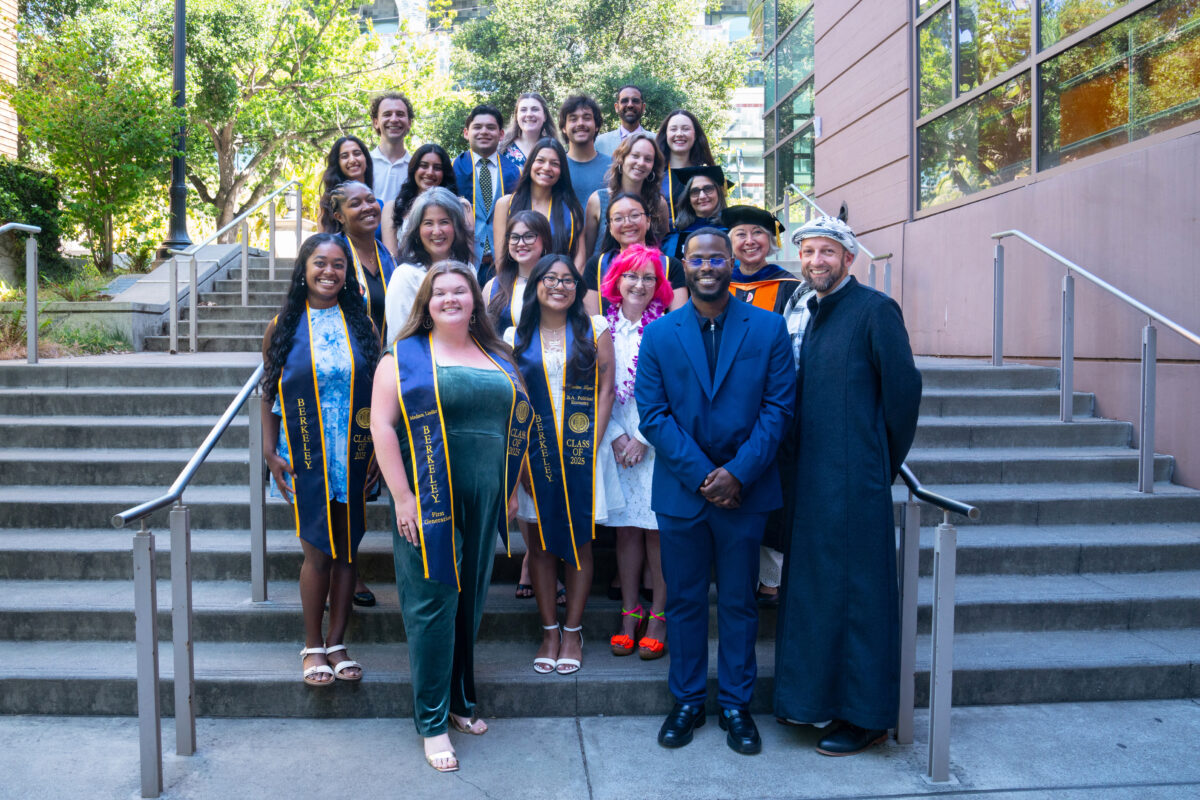
Earlier this month, friends and family filled Sutardja Dai Hall’s Banatao Auditorium to celebrate the commencement of the GPP minor’s Class of 2025, the 18th cohort of students to tackle poverty by studying the global systems and power structures that sustain inequality. 

Director of the Global Studies Program and Chair of the GPP minor Elora Shehabuddin spoke to the significance of this historical moment, with graduates completing their coursework, she said, amid escalating climate disasters, emerging armed conflicts, and the first livestreamed genocide, carried out by the Israeli state against the Palestinian people.

“In every case, you learned to read and think beyond the headlines of mainstream media, to consider the histories of these conflicts and the power dynamics that shaped them, and to center the history of the human beings affected,” Shehabuddin said. “These graduates inspire all of us as champions for social justice, and they represent the best of UC Berkeley.”  

This year’s graduating class includes over 30 students representing more than 20 majors. As part of the minor, students completed a personalized practice experience that involved interning or volunteering with a government agency, nonprofit organization, or community group working on poverty issues.

A defining element of the program, the practice experience is designed to help students bridge theoretical frameworks with real-world poverty action, and it held particular meaning for student commencement speaker and legal studies major Johnna Spikes.

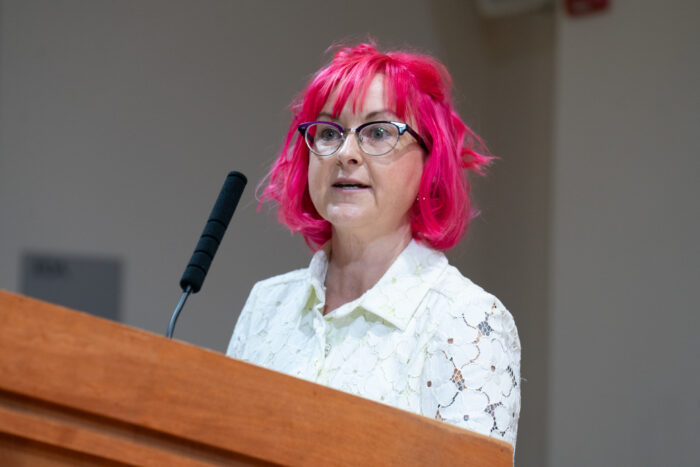
Johnna Spikes (Photo by Amy Sullivan)

With a family history rooted in public service, Spikes spent much of her early life engaged in similar work. She pursued a career in law, working as a paralegal and office manager at the law firm of Haddad and Sherwin. At Berkeley, she deepened her commitment to justice through internships with Legal Services for Prisoners with Children and the Ella Baker Center for Human Rights.

She joined GPP to continue her work in public service, but what she learned reshaped how she approaches that work. 

“I entered this minor with an idealistic desire to serve, as I believed that by helping those who are suffering, I’d be fulfilling some noble mission,” Spikes said. “I’ve come to realize that service without connection can become charity. True compassion doesn’t come from a place of distance, it comes from standing shoulder to shoulder, seeing the humanity in each other, and walking forward together.”

She volunteered with Old Skool Cafe, a San Francisco restaurant run by formerly incarcerated, foster care, and at-risk youth. More than just a place to eat, the cafe operates as a violence prevention program, offering job training and meaningful employment.

At Old Skool, she saw firsthand how young people often pushed to the margins weren’t treated as problems to be fixed, but as leaders — shaping the menu, helping run the restaurant, and building the kind of community they wanted to see.

“That’s what love looks like when it is rooted in justice,” Spikes said. “In this work, compassion isn’t a gesture of service, it’s a radical act of kinship grounded in the belief that there is no us and them, only us. The fight against poverty and injustice isn’t just something we choose to do, it’s something we’re here for.”

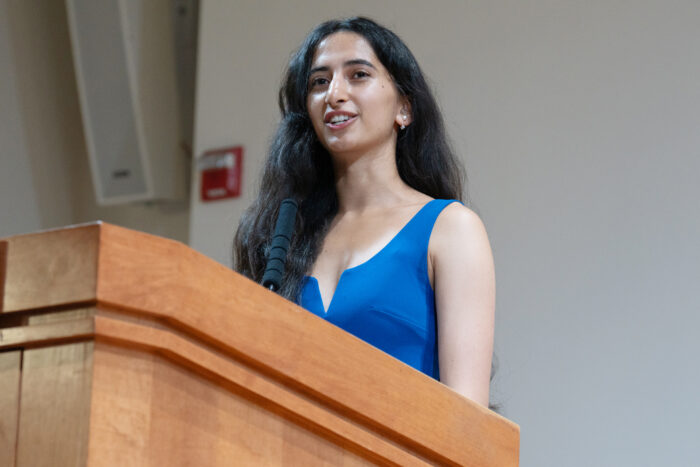
Similarly, the minor challenged student speaker and civil engineering major Anahita Banerjee to dig deeper in her search for solutions to global inequality. She has extensive experience in global water access, and her fieldwork spans rural India, Peru, and California, where she’s partnered with local communities to develop clean, dependable water infrastructure.

Anahita Banerjee (Photo by Amy Sullivan)

As a GPP minor, she said her daily assignments challenged her to confront global issues by asking tough questions like, “Why is there a housing crisis in the Bay Area? Why does the U.S. have the highest incarceration rate in the world?” 

She added that simple answers—blaming things like lack of wealth, infrastructure, or education—wouldn’t cut it. Instead, the program pushed students to keep digging until they uncovered the deeper systems behind these problems: a prison system profiting from forced labor, or policies that force formerly colonized countries to prioritize debt payments over vital infrastructure.

“Yet, I would still call these B+ answers at best, because our homework is incomplete if it remains passive,” Banerjee said. “The most important question that this minor instills in us is, ‘What are we going to do about it?’”

Driven by that same sense of responsibility, she plans to work as a reporter for a nonprofit covering water issues, and then pursue a master’s degree at the University of Oxford in Water Science, Policy, and Management. 

Facing her classmates, she expressed confidence that they will all continue to ask these critical questions and strive to “earn that A+.”

“Some of us may continue working with nonprofits, while others will work as doctors, teachers, or social workers,” Banerjee said. “However, all of us will go on to be outstanding members of society and not allow ourselves to turn away from the injustices around us.”

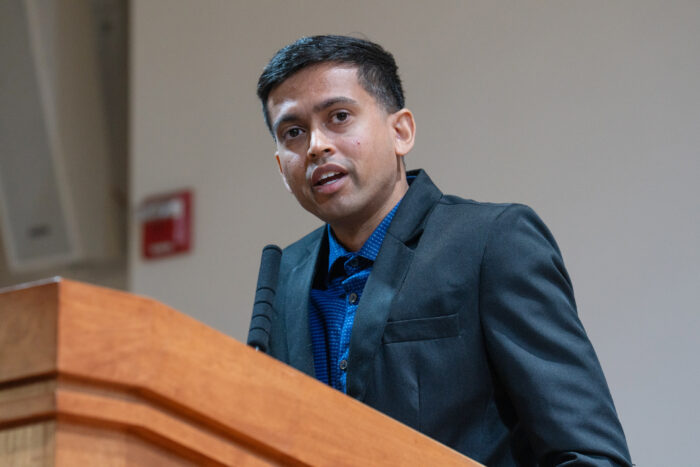
The ceremony concluded with a speech from GPP alumnus Jamal Khan. He graduated as part of the second cohort of GPP students in 2009, and went on to attend Harvard Law School. Since then, he has held positions in both the federal government and politics, including the Obama White House and Kamala Harris’s Senate campaign. He currently serves as an attorney for The Homeless Action Center

Jamal Khan (Photo by Amy Sullivan)

Drawing from his experiences in legal advocacy and direct support for unhoused individuals, incarcerated people, and those facing mental health challenges, he emphasized that dehumanization—whether in the language of war or in the bureaucracies of everyday life—is often the precursor to violence and neglect.

Khan left graduates with a powerful closing message:

“No matter the vantage point from your organization or your role, if you find yourself feeling uncertain or confused, the most important thing you can do with regard to those you’re trying to help, is to remember humanity,” Khan said. “Conågratulations, I wish you all the best. Go out there and do big things, go-getters.”

Joeva Sean Rock Joins Global Poverty & Practice Program

Joeva Sean Rock, an outstanding instructor in international development who researches agricultural biotechnology, food sovereignty, and environmental governance, has joined the Blum Center’s Global Poverty & Practice program as Lecturer.

Joeva Sean Rock, an outstanding instructor in international development who researches agricultural biotechnology, food sovereignty, and environmental governance, has joined the Blum Center’s Global Poverty & Practice program as Lecturer. 

Rock, who has served as Professorial Lecturer in the Health Inequity and Care Program in the Department of Anthropology at American University, has taught courses on globalization, social movements, and political-economic determinants of health. She earned a BA in International Studies/Political Science from UC San Diego and a MA and PhD in Anthropology from American University. She has served as a Postdoctoral Research Fellow in the Department of Nutrition and Food Studies at New York University. 

Rock’s research has been funded by the Fulbright-Hays Program and the Wenner-Gren Foundation, and featured in African Affairs; Culture, Agriculture, Food and Environment; Global Bioethics; The Nation; Popula; and Foreign Policy in Focus. She has served as a contributor to Africa Is a Country, where she writes on issues related to development, agriculture, and social change.

Her current book project is We Are Not Starving: the Struggle for Food Sovereignty in Ghana, “an ethnography of Ghanaian activists, farmers, scientists and officials embroiled in intense debates over agricultural futures, national development and political sovereignty,” according to Rock’s website.

Among Rock’s areas of expertise is online learning, a boon for UC Berkeley, as the campus enters its first full semester of virtual learning due to the COVID-19 pandemic. 

“I’m thrilled to be joining a program that takes a critical lens to poverty and development practice,” said Rock. “As inequalities continue to widen in the U.S. and around the globe, we need more than ever students and practitioners who are committed to building different, more equitable worlds. GPP 115 seeks to do just that, and equips students with interdisciplinary skills in asking deep questions, analyzing structures of inequality, and imagining alternatives.”

Deep Learning and Mindset Shifts in GPP Summer Study

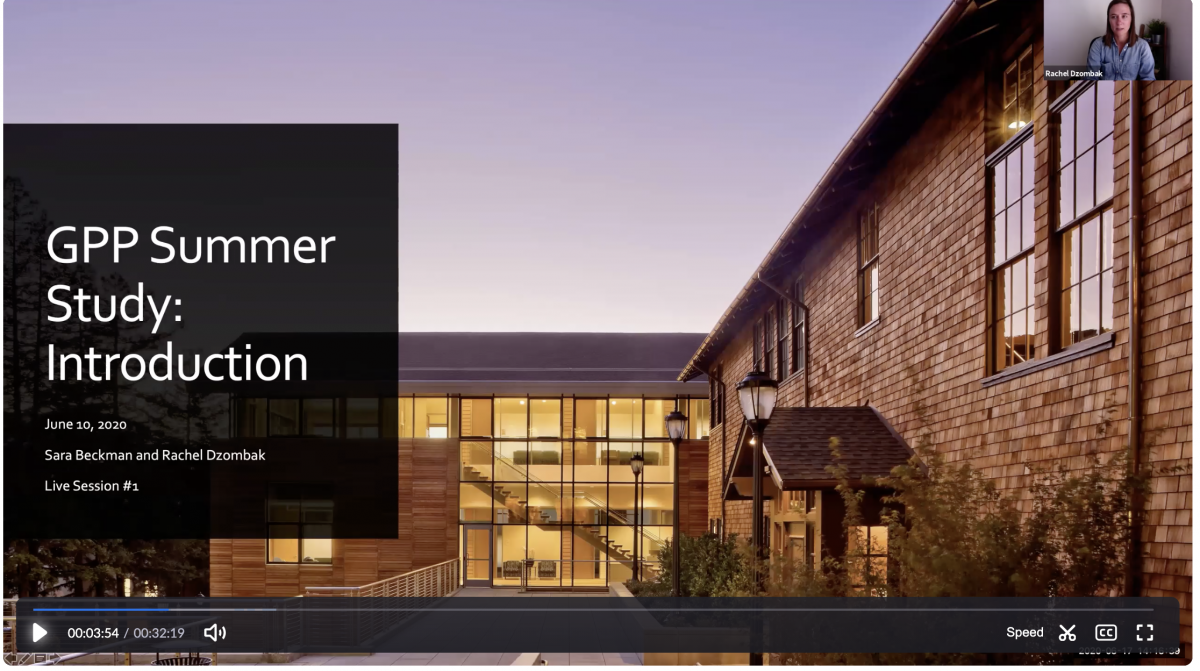
Due to the COVID-19 pandemic, Global Poverty & Practice Experiences were cancelled this summer. However, the Blum Center created the GPP Summer Study, taught by Dr. Rachel Dzombak with 22 students across 15 majors to explore ways in which they might create change for a problem they care about.

The signature element of the Blum Center’s Global Poverty & Practice undergraduate minor is a “practice experience” for students to connect the theory and practice of poverty action. Students select to work with nongovernmental organizations, government agencies, social movements, or community projects that focus on various dimensions of poverty action—from community health and food security to economic justice and grassroots political power, in the U.S. and abroad. 

The COVID-19 pandemic has changed that. Students have been forced to cancel their summer 2020 practice experiences, and seniors have questioned their ability to finish the minor. As one student wrote, “My PE in Ghana was cancelled and since I am a senior I am unable to reschedule my PE abroad to next summer.”

To address this problem, the Blum Center created an online offering for students to engage in deep learning and to allow for mindset shifts. GPP Summer Study taught by Dr. Rachel Dzombak supported 22 students across 15 majors to explore ways in which they might create change for a problem they care about. Problems pursued by the students included:

  • How might we address rising health disparities among low-income communities of color during the pandemic?
  • How might we reduce rates of disease in the northern region of Peru?
  • How might we expand educational technology access for young children?

Throughout the summer, GPP students leveraged toolkits from design and systems thinking to understand how to make change in a complex problem space. The first challenge was to determine what problem to tackle. Using a Ladder of Abstraction (Fig. 1), students thought critically about the problem space entailed and why it mattered. This helped them to see the problem space from multiple perspectives. They used “journey mapping” to understand, for example, the experience of an individual navigating the healthcare system during COVID-19. And they were challenged to map the system in which their problem exists—charting political, historic, economic, and social forces within specific communities. 

The students also engaged in introspection exercises to apply the same innovation process to themselves. “Students are grappling with really hard problems and questions in their life: Do I return to school during a pandemic? What are my job prospects amidst a pending global recession?” said Dzombak. “The same tools that can help a student discern a global development challenge can be used to help navigate ambiguity in their own life.” 

Dzombak said she structured the course so that students updated each other on their projects during each session. She also gave them time to connect about the complexity of being a student during a global pandemic. Asynchronous videos and resources allowed students to go deeper into their projects as time allowed. 

Said one student, “The Global Poverty & Practice Summer Study gave me a tool set to break down an issue and figure out ways I could begin to implement the changes I want seen.” A second shared: “It made me realize that GPP and my practice experience actually deal with real aspects of the world that need to be examined and not merely be seen as a ‘minor’ or a ‘practice.’”

Global Poverty & Practice Alumni Share Lessons Learned

At the Global Poverty & Practice Post-Practice Retreat, UC Berkeley alumni shared insights on navigating careers post-graduation. Panelists emphasized aligning work with personal values, embracing experimentation, and prioritizing mental well-being. From teaching and public health to energy inclusion and immigration policy, their diverse paths highlighted the evolving journey of finding purpose and impact in their careers.

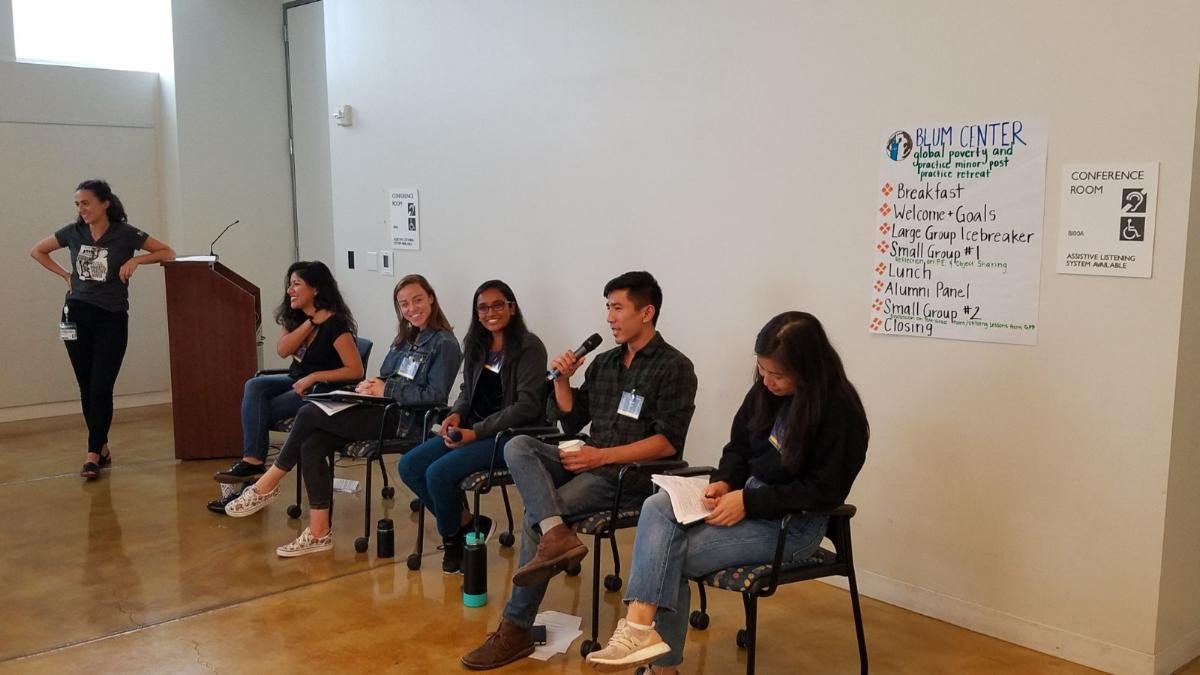
Career paths are both visible and hidden to UC Berkeley students, probably because college is both a time to prepare for the workplace and analyze its history. At the Global Poverty & Practice (GPP) Post-Practice Retreat on September 7 at Blum Hall, five GPP alumni shared their experiences navigating work and life after Berkeley. The retreat provides support for current GPP students as they consider their personal and professional  journeys at Berkeley and beyond.

Similarly, Priya Natarajan says she considers her work with Teach for America a “long-term practice experience.” Since being placed to teach elementary special education at a Voices Charter School in the Bay Area, Natarajan says she has been reminded of the power and the value of community, a theme commonly discussed in GPP coursework. Teaching special education has also made her reflect on the GPP minor’s emphasis on structural and systemic failures and the power dynamics present within the workforce. 

Like Natarajan, panelists Jennifer Fei, Ryan Liu, and Alison Ryan spoke about their own journeys after graduating from UC Berkeley and echoed the sentiment that figuring out the best fit professionally requires experimentation and a lot of trial and error. 

Jennifer Fei, currently a program manager at the Immigration Policy Lab, shared her experiences working at  Berkeley Consulting and Goldman Sachs as well as her decision to get a master’s degree in international policy from Stanford University, which helped her land her current job managing the Lab’s refugee research portfolio. Fei’s advice to GPP students is to never underestimate the importance of putting your best foot forward in every project and professional relationship. Fei said people are willing to advocate for you when they remember your quality of work. Fei also advised GPP students to make space for themselves by attending to their mental well being. Gonzales-Vargas agreed that making space for herself allows her to better serve the communities she represents. She says self care “helps to build my resilience and in spaces where I may otherwise have thought there was no hope.”

Similar to Fei, Liu’s postgraduate experience was not linear. Liu graduated from Berkeley with a B.S. in mechanical engineering, but was interested in finding work outside of what he saw as the rigid structure of the field. As a result, he explored an array of industries—from working at an NGO in Nicaragua to taking on positions in corporations, startups, and national laboratories. He eventually completed a master’s degree in mechanical engineering from Georgia Tech. Liu is now a product designer at Fenix International, an energy and financial inclusion company with offices in San Francisco, Kampala, and Lusaka. He says the completion of the GPP minor has allowed him to develop a more critical lens, one that encourages him to question power dynamics and to evaluate his own role within hierarchies.

Like Liu, Alison Ryan says GPP is ever-present in her work and shapes the way she thinks about and interacts with the world. She said that the GPP minor has heightened her awareness of problems with equity and how employers can contribute to making people feel valued. Ryan graduated from Berkeley with a degree in political science, and went on to receive her master of public health in epidemiology from UCLA. Ryan now works as a surveillance officer at the California Emerging Infections Program. Like fellow panelists, she said the trajectory of her career was much different than what she had anticipated during her undergraduate days at Berkeley. “You refine over time what you want and what you’re looking for and that changes as your career develops,” she said.

Redefining Secondary School Education in Ghana

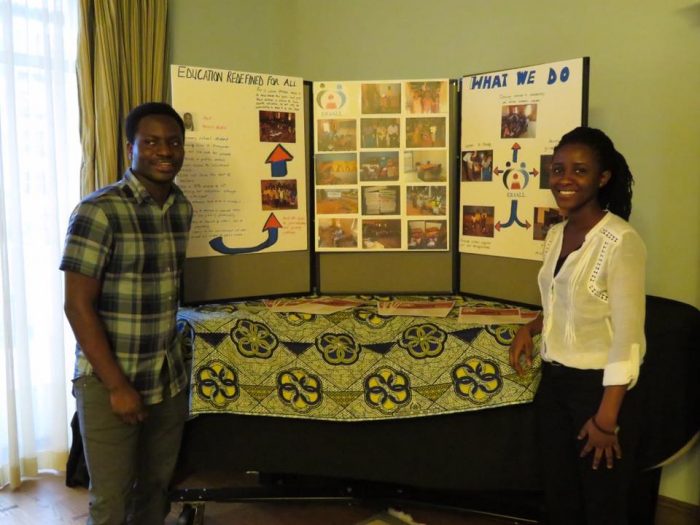
Abraham Martey and Vicentia Gyau, UC Berkeley alumni and Mastercard Foundation Scholars, founded Education Redefined for All (ER4All) to transform Ghana’s education system. ER4All addresses systemic issues by providing school supplies, career coaching, and parental empowerment programs. With a focus on critical pedagogy and practical skills, they aim to create sustainable opportunities for youth and communities.

Growing up in Ghana in the 1990s and 2010s, Abraham Martey and Vicentia Gyau understood that the weak educational system in their country was a byproduct of structural failures that were hardest on the poor. At UC Berkeley, where the two Mastercard Foundation Scholars majored in Global Studies and minored in Global Poverty & Practice, they steeped themselves in learning about global powers, structural injustices, poverty alleviation, and humanitarian aid.

Abraham Martey and Vicentia Gyau present a poster of the ER4All model.

One fact the UC Berkeley students noted time and again was that for educational projects to have success, a synergy must exist between development organizations and the communities they seek to help. In May of 2016 while freshman at Berkeley, they set out to create such an organization—Education Redefined for All (ER4All)—as a way to help to improve public school education and give back to youth in Ghana. ER4All received its Certificate of Incorporation in Ghana in June of 2016, and its Certificate of Recognition as a Regional/District Non-Governmental Organization in Ghana November of 2017.

“The ultimate goal of ER4All,” says Gyau, “is to change the face of education in Ghana from a chew and pour system—one that focuses on how well students are able to memorize and regurgitate information—to a critical pedagogy where students are actively engaged in education and where education is made practical, easy, affordable, and accessible to everyone.” 

Martey and Gyau say that the Global Poverty & Practice program helped them to gain a critical lens through which to think about how to proactively approach solutions that center on people while acknowledging structural failures. For that reason, ER4ALL works to find effective solutions not just to educational access but to unemployment in Africa by addressing what Gyau refers to as “the root of the problem, not just the leaves.” 

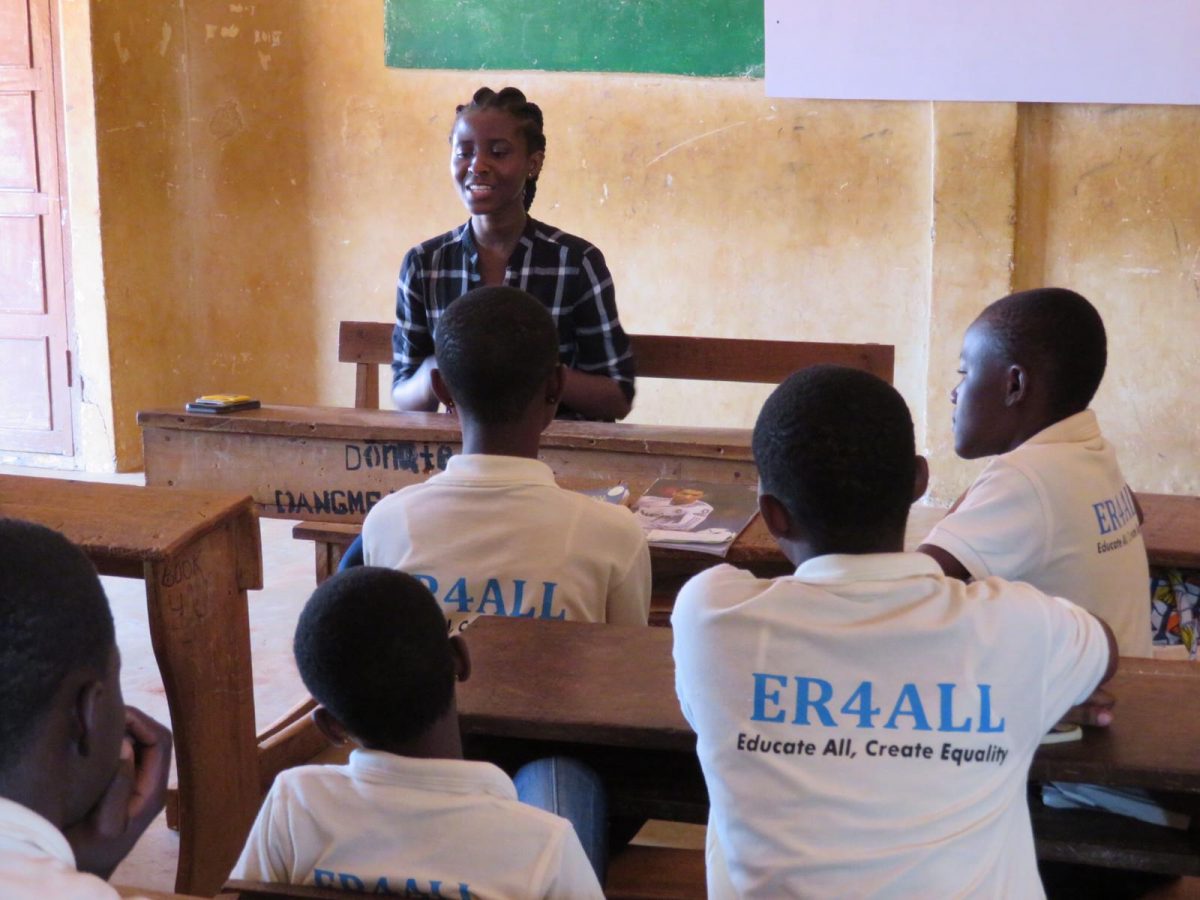
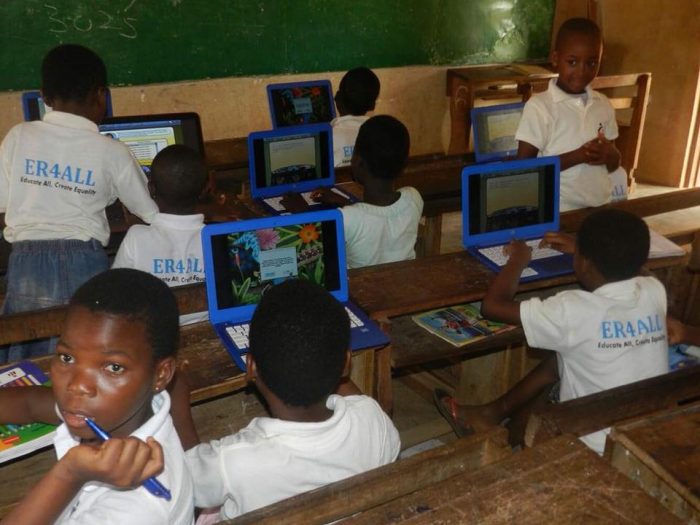
ER4All provides its beneficiaries—financially disadvantaged students aged 6-19 and their parents—with school supplies, tutoring in entrepreneurship, leadership, and computer literacy, as well as career coaching to help high school dropouts (one of whom went on to become a Community Police Driver) learn a trade of their choice, such as sewing and driving. 

Because access to secondary school education in Ghana is very new—indeed tuition-free high school is only one year old—Martey and Gyau say most parents from disadvantaged backgrounds don’t have the experience necessary to guide their children through school or help plan for their livelihoods afterward. For that reason, ER4ALL has developed an Empowerment Fund that provides parents with capital to start or invest in existing businesses, offers lessons in entrepreneurship, and engages parents in discussions on how they can be actively engaged in the education of their children. The Empowerment Fund is meant to help parents both attain a higher level of financial security and participate in the education of their children.

Currently, ER4All serves 18 students, 18 parents, and two high school dropouts in Prampram and neighboring towns in Ghana. Martey and Gyau say that the Global Poverty & Practice minor introduced them to the idea that approaches to aid should be analyzed and reassessed to best suit beneficiaries’ needs. As such, they want to apply new methodologies in response to what does and doesn’t work. Says Martey:  “We make sure we have the best interest of our beneficiaries in mind, and not impose on them what we think will help—but doing what works best for them.” 

Since graduating from Berkeley, Gyau has been selected to be a Student Support Fellow at the African Leadership Academy, a South Africa-based organization whose mission is to develop a network of over 6,000 leaders to collectively address the continent’s greatest challenges. Meanwhile, Martey is enrolled in McGill University for a Master of Education and Society. He says, “At McGill, I am taking courses related to and or in curriculum development to help further develop the Leadership and Entrepreneurship Curriculum we are currently using.” His main focus is on first generation college students, learnings from which he plans to apply to ER4All.

While in Canada and South Africa, Martey and Gyau are maintaining their roles at ER4All and are in constant touch with the teachers and administrators on staff in Ghana. Martey is focused on funding opportunities, budgets, and the further development of the Leadership and Entrepreneurship syllabus. Gyau oversees the staff, helps recruit new students, and further develops guidance, counseling, and study skills to better serve ER4All’s beneficiaries.

Gyau says the long-term vision of ER4All is to catalyze a shift from standardized education in Africa to a focus on the economic and social well being of students and their communities. “Overall, the idea of ER4All is to create an ecosystem in which youth in Ghana are able to start their own trades, create jobs for themselves, and enter the workforce with applicable knowledge and skills,” says Martey.

Empowering Students Inside and Outside the Classroom

Shankar Sastry, Faculty Director of the Blum Center at UC Berkeley, emphasizes fostering lifelong learning by adapting pedagogy to students’ evolving needs. In his robotics course, recorded lectures allow self-paced learning, transforming faculty into knowledge guides. Sastry highlights engaging curiosity through interdisciplinary classes and supporting students’ personal growth through reflective conversations and leadership workshops.

How do we educate students to become lifelong learners? University professors are continually grappling with this question, as we aim to spark students’ curiosity and engage them in thought-provoking coursework.

This fall, I am re-engaging in teaching undergraduates after 11 years, leading a 200-person course on robotics and intelligent machines. Although I will need to extensively supplement the textbook I wrote more than 20 years ago for the course, I am excited to connect with students in my field and take part in a changing undergraduate pedagogy at the nexus of technology, design, and problem solving.

Students today learn differently than my generation and have new tools at their disposal. In my class, all lectures will be recorded and made available online. This allows students to engage with the material in new ways. If they miss a lecture, they can catch up afterward. If they have questions or find a topic challenging, they can consume the lecture at their own pace, pausing to make sense of information or look up answers to questions as they arise. Indeed, it is common for students to have class-viewing sessions in their dorms. And if students are familiar with a topic area, they can watch at 1.5 speed or just focus where they need deeper understanding.

This approach is a boon for faculty as well. It frees us up to answer more substantive questions and workshop homework or challenges rather than respond to the students’ request “to explain that theorem one more time.” Giving students the ability to learn at their own pace and in their own style is one way to make learning more self-directed. It also transforming the role of faculty from holders of knowledge to knowledge guides and exploration counsellors.

Another way we are trying to inspire lifelong learners is by engaging curiosity. For the second time, we are offering a Development Engineering graduate section of our core undergraduate Global Poverty & Practice class. By opening up a graduate section designed for engineers, we aim to encourage engineering graduate students to pursue knowledge they might otherwise not encounter. The class will connect critical debates around development and foreign aid with current issues around technology (such as data privacy) and research (AI and job churn).

Finally, if we are to educate lifelong learners, we must acknowledge we are aiming not only to expand students’ intellect but also their life choices. Attending Berkeley is a widely viewed as a catalyst to becoming an engaged citizen—but only if students have the time to reflect on their individual motivations and career trajectories. Too often at Berkeley, we don’t create enough space for students to have conversations about their individual growth and journeys. To that end, we are developing a toolkit that will help faculty better facilitate conversations around personal motivations, leadership skills, and offer student workshops that will help them design (and re-design!) lives that are purposeful and fulfilling.


What It Means To Be First Generation LatinX in Medical School: An Interview with Leilani Gutierrez-Palominos and Karla Tlatelpa

The Blum Center reached out to Karla Tlatelpa and Leilani Gutierrez-Palominos to ask how the Global Poverty & Practice minor helped shape their understanding of and participation in the medical field.

Karla Tlatelpa and Leilani Gutierrez-Palominos, UC Berkeley graduates who majored in Molecular and Cell Biology and minored in Global Poverty & Practice, have recently been admitted to the David Geffen School of Medicine at UCLA. They are attending UCLA’s Program in Medical Education-Leadership and Advocacy (PRIME-LA), which enables students to focus on underserved communities. Tlatelpa and Gutierrez-Palominos are both first generation college Latinx women who have defied odds and pushed through barriers to get to where they are now. The Blum Center reached out to Tlatelpa and Gutierrez-Palominos to ask how the Global Poverty & Practice minor helped shape their understanding of and participation in the medical field.

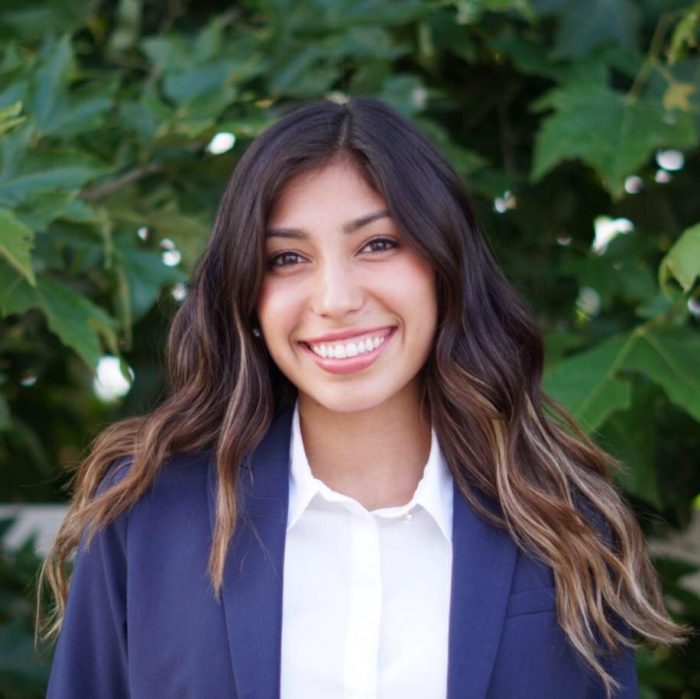
Karla Tlatelpa

What inspired you to join the Global Poverty & Practice minor?

Leilani Gutierrez-Palominos: I wanted to apply a critical social lens to my understanding of poverty and inequality. I have experienced poverty on a downstream level, but I wanted to learn what upstream factors caused the poverty I had witnessed. My existence in this country, as a previously undocumented immigrant, is inherently political. Thus, I am personally invested in advocacy efforts regarding underserved communities. My clinical and personal experiences have shown me patients’ desire to feel represented and understood, both through language and culture. In addition to having my background drive my passion for addressing inequalities, minoring in GPP provided me with the historical, political, and economic knowledge necessary to analyze and address systemic forces contributing to poverty.

Karla Tlatelpa: Growing up, my family experienced many injustices that, at the time, I thought were only happening to us. As I grew older and learned more about the systems in which we live, I began to understand that our circumstances were not isolated and were part of systemic problems that other families like mine were experiencing. We were a low-income family of undocumented immigrants, so my parents worked two to three  jobs at a time to keep us economically afloat. From the ages of 7 to 15, I worked 12-hour days with my grandma on weekends selling candy at the Oakland Coliseum flea market to help contribute to our food budget, especially since being undocumented meant we did not have access to social services like SNAP. With limited access to health care due to a lack of health insurance, my family’s health problems would sometimes go unattended. As I entered UC Berkeley, I wanted to gain a framework that would help me understand the disparities families like mine experience as a result of limited economic and social rights. On orientation day, I came across a student tabling for the Global Poverty & Practice minor and was immediately hooked!

Leilani Gutierrez-Palominos

How has the GPP minor changed your perspective on the field of medicine, if at all?

Gutierrez-Palominos: The GPP minor has made me more socially aware and fostered my sense of seeking to serve underserved populations. The minor has allowed me to delve deeper into wanting to understand upstream social determinants of health, which encouraged me to apply to the PRIME program at UCLA. I will be weaving an additional Master of Public Health year into my four years of medical education.

Tlatelpa: GPP helped me understand the role I will have as a physician beyond the clinical setting. I’ve always known that physicians are highly respected members of society, but GPP highlighted the extent of my privilege as a future physician. After GPP, my drive to study medicine shifted from a desire to help individuals in my community to also include a sense of responsibility to use the power and influence that being a MD provides to push for positive social change.

What lessons from GPP will you carry forward into your medical education and career?

Gutierrez-Palominos: Through the GPP minor, I considered the economical, social, and political dimensions involved around engaging in poverty work—which is relevant to my aspiration of providing care in low-income areas as a doctor. The GPP minor focuses on processes, such as the process of grappling with newfound concepts, which helped to further develop my critical thinking skills. Knowing that poverty doesn’t have a simple solution, I remained humble when engaging in poverty alleviation work since I always had to consider further implications, possibilities, and ways to improve. I became more conscientious of the decisions I made in ethical consumption, my support for certain organizations, and evaluating the effectiveness of certain methods/approaches when serving impoverished communities. Lessons of humility and critical thinking is what I will carry forward.

Tlatelpa: One of the greatest lessons GPP taught me was to always ensure I include the community’s voice in decision making that will affect them directly. As a medical student and eventually a physician, I will be regarded as an expert in many situations. However, I will take the teachings from GPP and my practice experience and remind myself and my colleagues that community members are the experts of their own lived experience and should always be included in the decision making process.

What’s the most important thing people should know about you as a Latina entering the world of medicine?

Gutierrez-Palominos: My clinical and personal experiences have shown me patients’ desire to feel represented and understood, both through language and culture. Underrepresentation causes low-income Latino communities to mistrust the medical field and lack mentors they can seek for guidance. Thus, this encourages me to gain more representation for my community and underserved communities like the ones I come from. There are few  Latinas in medicine; at UCLA medical school I am not only representing myself, but a greater community—both the village it took to continuously support me on this journey and those who will come after me.

Tlatelpa: There are few Latinx in medicine; this field is certainly not representative of the general population. This meant that when my family had health insurance, we did not usually have medical providers who shared our language or culture. Being a Latina in medicine means that I will have the unique opportunity of improving health outcomes in the Latinx community and relate to my patients in the way my family would have liked to with our own physicians.

What do you hope to accomplish for yourself, your family, your community, or the great world in becoming a doctor?

Gutierrez-Palominos: I hope to have the agency to help in situations where a medical professional is desperately needed. For example, experiencing death and disease in my own family that could have been prevented had there been a doctor. I want to be an advocate for my community and give back to low-income areas like the ones I come from. Due to my background, my ultimate goal is to work in under-resourced global communities involving poor migrants.

Tlatelpa: In the future, I see myself working as a primary care physician in under-resourced, largely Latinx communities. I also see myself working at the policy level to increase access to healthcare for everyone, including undocumented and socioeconomically disadvantaged folks. As part of the Program in Medical Education-Leadership & Advocacy (PRIME-LA) at UCLA, I will take time off from medical school to pursue a Master’s degree in public policy. Through this additional training, I hope to gain the tools necessary to advocate effectively for my patients’ economic and social rights and to carry out policy work that may institutionalize protection for under-resourced communities to access care and other vital social services. As a physician, my voice will carry more weight and increase the impact I could have at the policy level to create changes that will positively affect people beyond those I can reach during individual consultations.

Host and Fellow Responsibilities

Host Organizations

  • Identify staff supervisor to manage I&E Climate Action Fellow
  • Submit fellowship description and tasks
  • Engage in the matching process
  • Mentor and advise students
  • Communicate with Berkeley program director and give feedback on the program.

Berkeley Program Director​

  • Communicate with host organizations, students, and other university departments to ensure smooth program operations

Student Fellows

  • Complete application and cohort activities
  • Communicate with staff and host organizations
  • Successfully complete assignments from host organization during summer practicum
  • Summarize and report summer experience activities post-fellowship